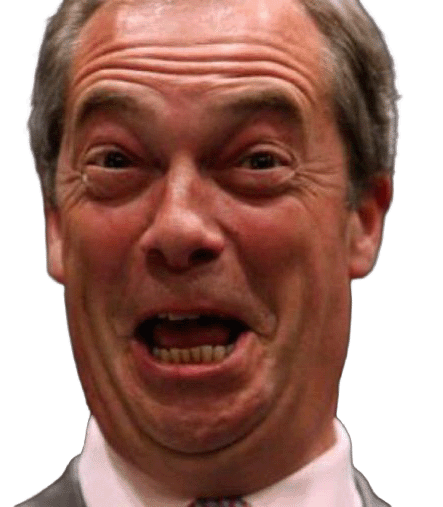
Biography
Nigel Farage is a prominent right-wing British politician who served as leader of the UK Independence Party (UKIP) from 2006-2016 and currently leads Reform UK, having been a pivotal figure in the Brexit campaign. As a Member of the European Parliament from 1999-2020, he consistently used his platform to advocate for stricter immigration controls and criticize EU migration policies. Farage has placed immigration and asylum policy at the center of his political messaging throughout his career, often employing rhetoric that critics describe as inflammatory and divisive. His controversial statements on immigration include claims about HIV-positive migrants being a burden on the NHS, expressing concerns about Romanian neighbors, and making sweeping generalizations about multiculturalism's impact on British society. During the Brexit referendum, Farage's "Breaking Point" poster showing queues of migrants was widely criticized as xenophobic and compared to Nazi propaganda by some political opponents. He has repeatedly faced accusations of promoting discriminatory views and maintaining associations with far-right figures, though he consistently denies charges of racism. As leader of UKIP, Farage oversaw the party's rise during a period when anti-immigration sentiment was increasing, capitalizing on concerns about EU freedom of movement and asylum seeker numbers. His rhetoric has included unsubstantiated claims about immigration levels and their impact on public services, contributing to polarized debates about Britain's immigration policies. Following Brexit, Farage founded the Brexit Party (later Reform UK) and has continued to advocate for stricter asylum policies and reduced immigration. Despite multiple unsuccessful attempts to win a Westminster seat, Farage maintains significant influence in British politics through media appearances and social media presence, where he continues to shape immigration discourse. His political legacy is intrinsically linked to his role in promoting anti-immigration sentiment and his contribution to Britain's departure from the European Union.
Toxicity Rating
| Attribute | Score | Justification |
|---|---|---|
| Cruelty | 6 / 10 | Uses harsh rhetoric about vulnerable groups like asylum seekers that can cause psychological harm. |
| Racism | 7 / 10 | Made statements about Romanian neighbors and HIV-positive migrants that many consider discriminatory based on nationality and origin. |
| Xenophobia | 8 / 10 | Consistently promotes fear-based messaging about foreigners and immigrants throughout his political career. |
| Scapegoating | 8 / 10 | Regularly blames immigrants and EU migrants for Britain's economic and social problems. |
| Superiority | 6 / 10 | Promotes British exceptionalism and suggests British culture is superior to multiculturalism. |
| Selfishness | 5 / 10 | Pursues political goals that benefit his ideology while potentially harming immigrant communities. |
| Deception | 7 / 10 | Made unsubstantiated claims about immigration levels and their impact on public services. |
| Incitement | 6 / 10 | His inflammatory rhetoric contributes to hostile attitudes toward immigrants and minorities. |
| Violence | 4 / 10 | No direct promotion of violence, though his rhetoric may contribute to hostile environments. |
| Corruption | 3 / 10 | No documented evidence of financial corruption or abuse of power for personal monetary gain. |